What Is Conduit Fill? A Complete Guide for Electricians
Learn everything about conduit fill: NEC rules, calculation methods, safety reasons, and professional best practices. The ultimate guide for electricians.

Сандер К. Осей
Електротехник (Инженер) – специалист (СВП)
Съдържание
- The Physical Definition of Conduit Fill
- Why Does Conduit Fill Matter? (The Three Pillars of Safety)
- 1. Heat Dissipation
- 2. Physical Protection and Pulling Stress
- 3. Future Maintenance and Upgradability
- The “Golden” Percentages: Understanding NEC Table 1
- Why the 31% Rule for Two Wires?
- How to Calculate Conduit Fill (A Quick Overview)
- Step 1: Accumulate Wire Areas
- Step 2: Identify Conduit Area
- Step 3: Compare
- Common Factors That Change the Math
- Practical Tips for Staying Compliant
- Conclusion: Mastering the Basics
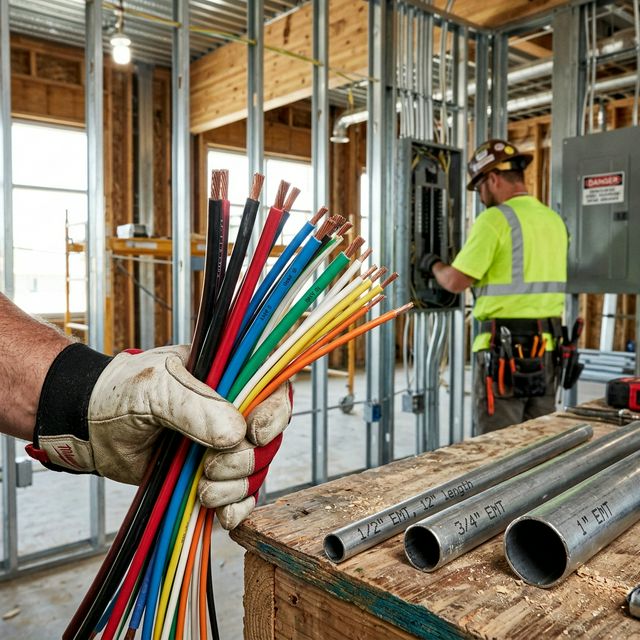
If you’re an electrician, you know that the word conduit fill is one of the most frequently used terms on a job site. Whether you’re planning a massive commercial feeder or a simple residential lighting circuit, the amount of “stuff” you can put in a “pipe” is the foundation of every safe electrical installation.
But conduit fill is more than just a simple calculation. It’s a combination of safety, physics, and code-compliance that separates a professional master electrician from a weekend DIYer. Getting it wrong doesn’t just mean a failed inspection; it means a potentially hazardous installation that could lead to property damage or worse.
In this comprehensive guide, we’ll explain exactly what conduit fill is, why it’s regulated by the NEC (National Electrical Code), and how to master the math behind it.
The Physical Definition of Conduit Fill
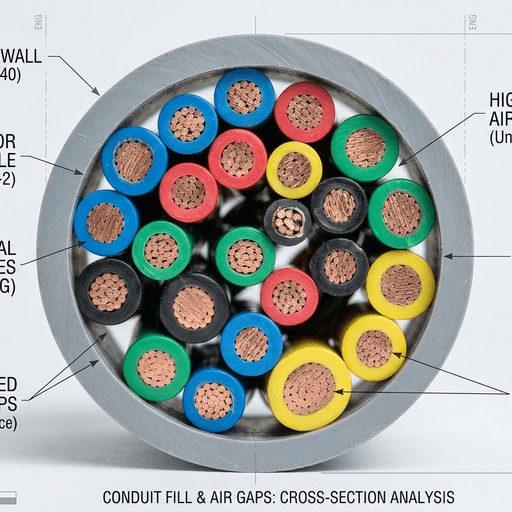
In its simplest form, conduit fill is the percentage of a conduit’s internal cross-sectional area that is occupied by the wires or cables passing through it.
Imagine a cross-section of a 3/4-inch EMT conduit. Inside that pipe, you have your hot wires, your neutrals, and your grounds. Each of those wires has a specific thickness (diameter). The sum of the cross-sectional areas of those wires, divided by the total internal area of the pipe, is your conduit fill ratio.
Why Does Conduit Fill Matter? (The Three Pillars of Safety)
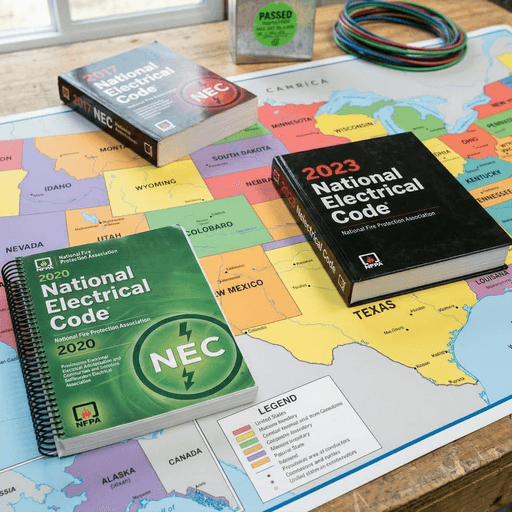
The NEC (National Electrical Code) doesn’t create rules just for the sake of it. The conduit fill limits in Chapter 9, Table 1 are built on three fundamental pillars of safety and reliability.
1. Heat Dissipation
Electricity generates heat. When several conductors are packed together in a tight space, the heat builds up. If a conduit is overfilled, there isn’t enough air gap around the wires to carry that heat away. Over time, high heat makes wire insulation brittle, leading to cracks, shorts, and structural fires.
2. Physical Protection and Pulling Stress
Wires aren’t just placed in a conduit; they are pulled through it. This pulling process creates massive amounts of friction and tension. If a conduit is too full, there is no room for the wires to move freely. This can lead to the insulation “skinning” or scraping off, exposing the bare copper or aluminum conductor.
3. Future Maintenance and Upgradability
Code-compliant conduit fill ensures that a journey-man electrician can come back ten years later and troubleshoot the system. If you pack a pipe to 90% capacity, it becomes impossible to remove a single failed conductor or add a new circuit without tearing out the entire run.
The “Golden” Percentages: Understanding NEC Table 1
The NEC provides different limits based on how many conductors you’re pulling. These are the rules every apprentice must memorize:
- 1 Conductor: 53% Fill allowed
- 2 Conductors: 31% Fill allowed
- 3 or More Conductors: 40% Fill allowed
Why the 31% Rule for Two Wires?
Wait, why is the limit for two wires (31%) lower than the limit for one (53%) or three (40%)? The answer is “jamming.” When two wires are pulled through a bend, they are more likely to twist over each other and “jam” against the conduit walls than any other combination. The lower limit ensures they have enough room to slide past each other during the turn.
How to Calculate Conduit Fill (A Quick Overview)
While we have detailed guides on the Manual Conduit Fill Formula, the process generally follows three steps:
Step 1: Accumulate Wire Areas
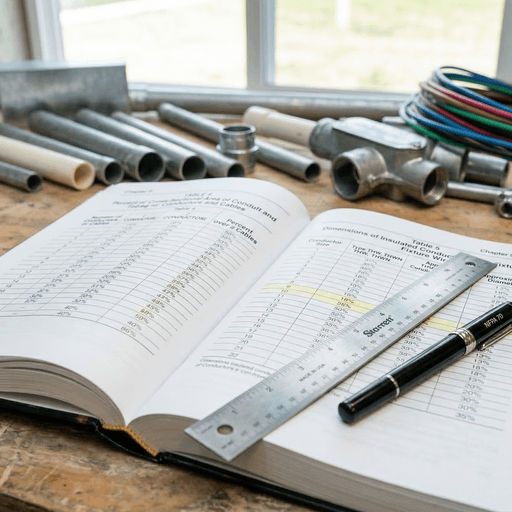
Use NEC Table 5 to find the cross-sectional area of each of your wires (including insulation). Add them all together.
Step 2: Identify Conduit Area
Use NEC Table 4 to find the total internal area of the conduit material you are using (EMT, PVC, etc.). Multiply this total area by your allowed fill percentage (usually 0.40).
Step 3: Compare
If your Total Wire Area is less than the Allowed Fill Area, your installation is code-compliant!
Common Factors That Change the Math
- Insulation Type: A #12 THHN wire is much smaller than a #12 XHHW wire. Never assume “a wire is just a wire.”
- Conduit Material: PVC Schedule 80 has a much smaller internal diameter than EMT or IMC. You must use the correct table for your specific pipe.
- Number of Bends: While not a “volume” rule, the total degrees of bends in a run (max 360°) significantly affects how much fill is “practically” allowable for a smooth pull.

Practical Tips for Staying Compliant
- Always count your grounds: Even though ground wires don’t “carry current” under normal loads, they still take up space. Always include them in your fill math.
- Upsize for Convenience: If you’re near 38% fill, save yourself the headache and go up one trade size. The labor saved in pulling the wires will far exceed the cost of the larger pipe.
- Use Digital Tools: Modern projects are too complex for manual charts alone. Use a Conduit Fill Guide and Tool to double-check your math before you buy your materials.
Conclusion: Mastering the Basics
Conduit fill is more than just a number; it’s a commitment to professional safety and reliable performance. By understanding the 40% rule and the reasons behind it, you ensure that every installation you complete is built to the highest standard.
Take the time to master your fill calculations, and you’ll never have to worry once the inspector shows up on site.
Want to learn more? Dive into our Complete Conduit Fill Reference for every conduit and wire combination in the NEC code.
? Често задавани въпроси
What is the basic definition of conduit fill?
Why is conduit fill regulated by the NEC?
What is the 360-degree rule for conduit?
Is conduit fill the same as wire fill?
What happens if I overfill a conduit?
За мен Сандер К. Осей
Сандър е професионален инженер (PE), лицензиран в Тексас и Джорджия, специализиран в системите за електроразпределение и спазване на електрическите кодове за търговско строителство. Притежава бакалавърска степен по електротехника от Georgia Tech и 11 години опит в консултантска дейност. Той преглежда техническото съдържание на този сайт за точност спрямо последната версия на NEC. Сандър гарантира, че всеки резултат от калкулатор и препратка към нормата отразява какво наистина прилагат инспекторите.