EMT vs. PVC vs. IMC vs. RMC: Which Conduit Type Should You Use?
Learn about the different types of electrical conduit and which one is right for your project. Our guide covers EMT, PVC, IMC, and RMC materials.
מארָאס ט. ווֶב
Pekerja Elektrik Berlesen & Penulis Teknik
Isi Kandungan
- 1. EMT: Electrical Metallic Tubing (The Standard)
- 2. PVC: Polyvinyl Chloride (The Corrosion King)
- 3. IMC: Intermediate Metal Conduit (The Heavy-Duty Medium)
- 4. RMC: Rigid Metal Conduit (The Heavy-Wait)
- Conduit Comparison Summary Table
- How Conduit Type Affects Your Fill Math
- Practical Tips for Choosing the Right Conduit
- Conclusion: Picking the Right Tool
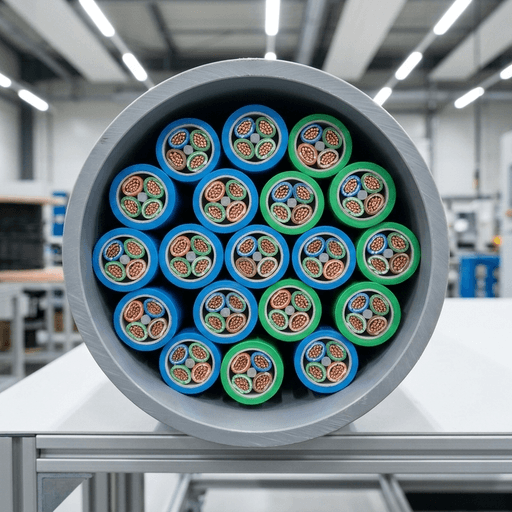
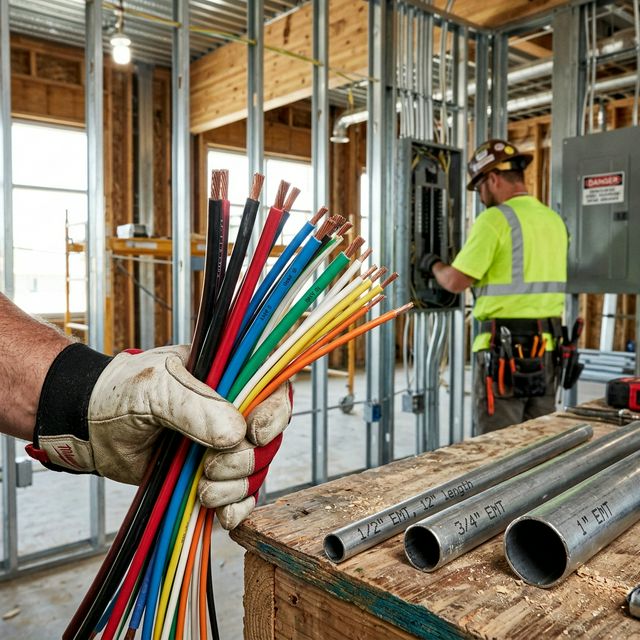
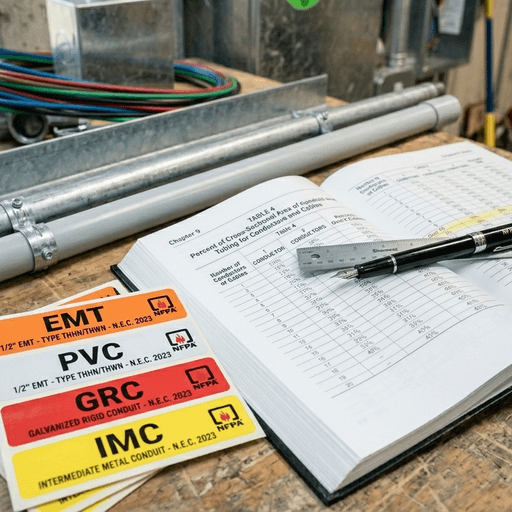
If you’ve ever stood in the electrical aisle of a supply house, you’ve seen the stacks of pipe in different materials, colors, and thicknesses. To the untrained eye, they’re just “pipes for wires.” But to a professional electrician, each one—EMT, PVC, IMC, and RMC—is a specialized tool with unique properties, internal areas, and NEC rules.
Choosing the wrong conduit type isn’t just a matter of convenience; it can affect your conduit fill capacity, your budget, and the long-term safety of your installation.
In this guide, we’ll compare the four most common types of electrical conduit, breaking down their strengths, weaknesses, and exactly when you should use each one.
1. EMT: Electrical Metallic Tubing (The Standard)
EMT is the most common conduit for general-purpose indoor electrical work. It’s often called “thin-wall” because it is lightweight compared to rigid steel.
- Material: Galvanized steel or aluminum.
- Internal Area: Largest of all trade sizes.
- Cost: Low to Moderate.
- Connecting: Uses compression or set-screw fittings.
- Best For: Dry indoor locations, unfinished basements, and commercial branch circuits.
Pro Tip: Because EMT has the thinnest walls, you can often fit more #12 or #10 wires in a 1/2-inch EMT than in a 1/2-inch PVC pipe.
2. PVC: Polyvinyl Chloride (The Corrosion King)
PVC is the favorite for underground direct-burial and wet or corrosive locations. It’s non-metallic and easy to cut with a simple saw.
- Material: Plastic (polyvinyl chloride).
- Internal Area: Moderate (smaller than EMT).
- Cost: Low.
- Connecting: Uses solvent cement (glue-together).
- Best For: Underground runs, pool lighting, and corrosive coastal environments.
The “Schedule” Factor:
- PVC Schedule 40: Standard for underground and general use.
- PVC Schedule 80: Extra-thick walls for mechanical protection. Using Schedule 80 significantly reduces your conduit fill capacity.
3. IMC: Intermediate Metal Conduit (The Heavy-Duty Medium)
IMC is a relatively recent innovation designed as a lighter, thinner alternative to RMC (Rigid Metal Conduit). It provides nearly the same protection as RMC but is easier to work with.
- Material: Galvanized steel.
- Internal Area: Moderate to High.
- Cost: Moderate.
- Connecting: Threaded together or using specific compression fittings.
- Best For: Industrial facilities, hazardous locations, and roof-top runs.
4. RMC: Rigid Metal Conduit (The Heavy-Wait)
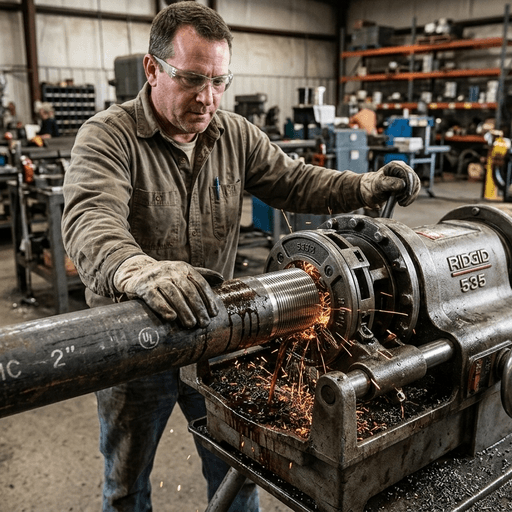
RMC is the “gold standard” for mechanical protection. It’s a heavy, thick-walled, threaded pipe that can withstand incredible force.
- Material: Heavy galvanized steel or aluminum.
- Internal Area: Smallest (due to thick walls).
- Cost: High.
- Connecting: Threaded together.
- Best For: Main service entrances, high-impact industrial areas, and high-voltage substations.
Fact: RMC is so heavy that 10 feet of 4-inch RMC can weigh over 100 lbs!
Conduit Comparison Summary Table
| Conduit Type | Material | Weight | Corrosion Resistance | Mechanical Protection |
|---|---|---|---|---|
| EMT | Metal | Light | Moderate | Low to Moderate |
| PVC | Plastic | Light | Excellent | Low to Moderate |
| IMC | Metal | Med | High | High |
| RMC | Metal | Heavy | High | Maximum |
How Conduit Type Affects Your Fill Math
The most important thing to remember is that Material = Wall Thickness.
- A 1-inch EMT pipe has an internal diameter of roughly 1.049 inches.
- A 1-inch PVC Schedule 80 pipe has an internal diameter of only 0.936 inches.
That 0.1-inch difference might not look like much on a ruler, but it represents a 20% loss in total area. If you calculate your wire count for EMT and then install PVC Schedule 80, your project will likely be overfilled and fail inspection.
Always use a conduit-specific calculator when switching materials to ensure your project stays safe and compliant.
Practical Tips for Choosing the Right Conduit
- Verify Your Local Amendments: Some cities (like Chicago) require metallic conduit for almost everything, even in residential settings.
- Consider the Environment: If you’re near the ocean, stay away from EMT; it will rust through in just a few years. Use PVC or aluminum RMC instead.
- Plan for Future-Proofing: If you think you’ll need to add circuits later, use EMT or IMC. They are easier to modify than glued PVC or extremely heavy RMC.
- Think About Grounding: Metallic conduits (EMT, IMC, RMC) can often act as a grounding path itself, though most modern specs still require a green copper wire inside for better reliability.
Conclusion: Picking the Right Tool
Choosing the right electrical conduit is about finding the balance between cost, protection, and installation time. By understanding the properties of EMT, PVC, IMC, and RMC, you ensure that your electrical backbone is perfectly suited for its environment and your project’s specific needs.
Don’t settle for “whatever’s on the truck.” Pick the right conduit, and your installation will be a testament to your professionalism.
Still confused? Use our Professional Conduit Comparison Tool for instant recommendations based on your installation environment.
? Soalan Yang Sering Diajukan
What is the most common type of electrical conduit?
Is PVC conduit better for underground runs?
What is IMC conduit?
When should I use RMC (Rigid Metal Conduit)?
Can I use EMT for exterior runs?
Mengenai מארָאס ט. ווֶב
Marcus ialah juruelektrik berpengalaman yang berlesen dengan lebih daripada 14 tahun pengalaman di lapangan dalam pemasangan elektrik komersial dan industri di seluruh Amerika Syarikat. Dia memegang sijil NICET Tahap II dalam Sistem Elektrik dan telah bekerja pada projek daripada wayar pejabat menara tinggi kepada laluan konduit pusat data. Marcus menulis untuk menjembatani jurang antara buku kod NEC dan keputusan di tapak kerja sebenar.