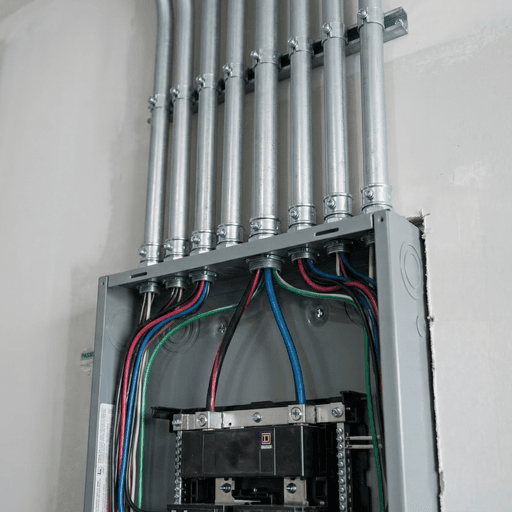
Wypełnienie Rurociągów i Obniżki Nośności Prądowej
Dowiedz się, jak współdziałają wypełnienie konduktów i obniżanie dopuszczalnej prądu w oparciu o NEC 310.15. Unikaj przegrzewania systemu elektrycznego dzięki prawidłowym obliczeniom wypełnienia i obniżania dopuszczalnej prądu.
Sąder K. Ożej
Inżynier elektryk (PE)
Spis treści
- Powiązanie fizyczne między wypełnieniem a ciepłem
- Conduit Fill: The Space for Safety
- Ampacity Derating: The Limit on Load
- NEC 310.15: Zasada Złota o Degracji
- Jak przepełnienie konduktora wpływa na pojemność prądu (Ukryty Koszt)
- Różnica między Fill a Prąd Nośny: Którego Wyznacza?
- Praktyczny przykład: Obliczanie wypełnienia i obniżek dla zamówienia
- Krok 1: Sprawdź Obecną Pojemność (Ograniczenie)
- Krok 2: Sprawdź wypełnienie kanału
- Wpływ temperatury otoczenia na ograniczenie obciążenia
- Wniosek: Przestań zgadywać, zacznij obliczać
Jeśli kiedykolwiek wyciągnąłeś kawałek drutu z starego rury i znalazłeś go sztywny, kruchy, a nawet lekko stopiony, prawdopodobnie widziałeś skutki złego deratingu. Przepełnienie rury nie jest tylko naruszeniem przepisów dotyczących przestrzeni; to jest wyrok śmierci termiczny dla Twoich przewodów.
W tym szczegółowym przewodniku wyjaśnimy, dlaczego MUSISZ sprawdzać zarówno stopień wypełnienia rury, jak i obniżanie nośności prądu jednocześnie oraz jak NEC 310.15 reguluje te dwie ze sobą powiązane zasady bezpieczeństwa.
Powiązanie fizyczne między wypełnieniem a ciepłem
Podstawowym pojęciem stojącym za obciążeniem rurociągów i obniżaniem dopuszczalnego prądu jest ciepło. Każdy przewodnik ma wewnętrzy opór, a przepływ prądu przez ten opór generuje ciepło (straty I²R).
Conduit Fill: The Space for Safety
Zasada wypełnienia prowadnika 40% (dla trzech lub więcej przewodów) dotyczy głównie przestrzeni fizycznej i odprowadzania ciepła. Zapewnia wystarczającą objętość powietrza wewnątrz rury, aby odprowadzić ciepło z izolacji przewodów i wydalić je przez ściankę rury. Jeśli wypełnisz rurę ponad 40%, skutecznie izolujesz przewody dodatkowymi przewodami, uwięźdzając ciepło w środku pęku.
Ampacity Derating: The Limit on Load
Derating to jest kolejnym krokiem w procesie bezpieczeństwa. Zadaje pytanie: „Biorąc pod uwagę ilość ciepła, którą spodziewamy się nagromadzić w tym przewodzie, jaki maksymalny prąd możemy bezpiecznie przewozić, bez stopienia się izolacji?”
Im więcej przewodów nośnych prądu umieścisz w pojedynczej nawinie, tym więcej ciepła jest generowane w ograniczonej przestrzeni. Dlatego też NEC wymaga, abyś obniżył (obniżył prąd) maksymalny prąd, jaki każda żyła jest uprawniona do przenoszenia.
NEC 310.15: Zasada Złota o Degracji
Przepisy dotyczące derating znajdują się w NEC Artykuł 310.15. Ta sekcja dostarcza tabele, których każdy elektryk musi używać do obliczania bezpiecznego obciążenia dla swoich przewodów.
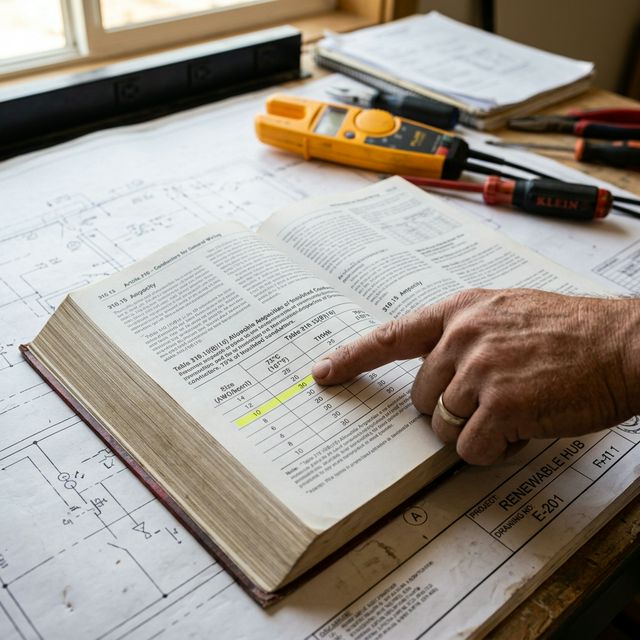
Zgodnie z Tabelą 310.15(B)(3)(a) (która teraz jest Tabelą 310.15(C)(1) w NEC z roku 2020/2023), korekty są następujące:
- 1–3 Przewodniki: 100% pierwotnej wydajności prądowej (bez obniżania)
- 4–6 Konduktory: 80% współczynnik dopasowania
- 7–9 Dyrygentów: 70% Faktor korekcyjny
- 10–20 Konduktorów: 50% Wskaźnik korekty
- 21–30 Dyrygentów: 45% Faktor korygujący
Jak przepełnienie konduktora wpływa na pojemność prądu (Ukryty Koszt)
Elektrycy często próbują zaoszczędzić pieniądze, używając mniejszych rur dla dużych podciągów wielokanałowych. Choć technicznie można podciągnąć 9 przewodów #10 THHN do rury EMT o średnicy 1/2 cala, pozostając poniżej limitu 40% wypełnienia, to aktywujesz czynnik obniżający 70%.
To oznacza, że może Ci się przydać zwiększenie grubości przewodów, aby przeciwdziałać obniżeniu obciążenia. Jeśli musisz zwiększyć grubość z #10 do #8, aby spełnić wymagania dotyczące obniżenia obciążenia, możesz wtedy odkryć, że te przewody #8 już nie będą pasować do rur o średnicy 1/2-cali!
To jest okrągła pułapka:
1. You ciągniesz za zbyt wiele przewodów. 1. Kod mówi, że należy zredukować. 1. Derating oznacza, że potrzebujesz grubszych przewodów. 1. Większy przewód nie zmieści się w rurze.
To właśnie dlatego mówimy, że musisz to sprawdzić jednocześnie. Użycie Conduit Derating Calculator jest najszybszym sposobem na przerwanie tego cyklu i znalezienie odpowiedniej kombinacji rur i przewodów przed rozpoczęciem ich wciągania.
Różnica między Fill a Prąd Nośny: Którego Wyznacza?
Wspólna pomyłka jest taka, że jeśli masz bardzo duży przewód zaledwie kilkoma przewodami, nie musisz się martwić o jego wypełnienie. Z drugiej strony, niektórzy uważają, że jeśli wypełnienie jest w porządku, to i nośność prądu jest w porządku.
Sprawdzenie rzeczywistości: Oba muszą być zaspokojone niezależnie.
- Jeśli Twój współczynnik wypełnienia wynosi 35% i masz 10 przewodów nośnych prądu, MUSISZ obniżyć dopuszczalny prąd.
- Jeśli Twoja stopa obniżki jest w porządku, ale wypełnienie wynosi 50%, MUSISZ powiększyć rurę.

Praktyczny przykład: Obliczanie wypełnienia i obniżek dla zamówienia
Przejdźmy przez rzeczywisty scenariusz. Instalujesz cztery obwody gałęziowe z wielopewkowymi 20-amperowymi (łącznie 8 przewodów nośnych prądu) w jednym rurze EMT. Przewody to #12 THHN.
Krok 1: Sprawdź Obecną Pojemność (Ograniczenie)
- 8 przewodów nośnych prądu = 70% Współczynnik Regulacji (Tabela 310.15 NEC).
- #12 THHN ampacity z kolumny 90°C (standard dla THHN) = 30 Amps.
- Ograniczona Pojemność: 30 Amperów x 0,70 = 21 Amperów.
Krok 2: Sprawdź wypełnienie kanału
- Całkowita powierzchnia 8 przewodów o średnicy #12 THHN = 8 x 0,0133 sq. in = 0,1064 sq. in.
- Użyj zasady 40% dla rury EMT o średnicy 1/2 cala (Całkowita powierzchnia wewnętrzna = 0,304 sq. in).
- 40% z 0,304 = 0,1216 sq. in.
Jeśli dodalibyśmy tylko dwie dodatkowe przewody (dla 5. obwodu), przeskoczyłibyśmy do czynnika obniżonego o 50% (15 Amps), co uczyniłoby przewód #12 nielegalnym dla obwodu o mocy 20 amperów. Musielibyśmy wtedy powiększyć przewód, co spowodowałoby przeciążenie rury o średnicy 1/2 cala.
Wpływ temperatury otoczenia na ograniczenie obciążenia
While we've focused on the number of conductors, NEC 310.15 also includes tables for ambient temperature adjustment. If your conduit is running across a hot roof or in an attic that reaches 110°F, you must apply another derating factor on top of the one for the number of conductors.
Ten efekt synergiczny jest przyczyną wielu niepowodzeń. Projekt, który funkcjonuje w klimatyzowanym magazynie, może być niebezpieczny, jeśli zostanie zainstalowany w wysokotemperaturowej pieкарni przemysłowej lub nad komercyjną kuchnią.
Wniosek: Przestań zgadywać, zacznij obliczać
Bezpieczeństwo w pracy z elektryką to nie kwestia nadziei, a matematyki. Rozumiejąc, jak współdziałają obniżki zdolności przewodzenia i obciążenie rur, chronisz swoją reputację, mienie klienta oraz swoją licencję.
Zawsze wykonuj „dwukrotną kontrolę” przed zakupem materiałów. Jeśli masz wątpliwości, użyj profesjonalnego oprogramowania lub Expert Ampacity Calculator, aby upewnić się, że praca zostanie wykonana prawidłowo za pierwszym razem.
Pro Tip: Pamiętaj, że neutralne przewody w obwodzie Wye 4-żyłowym, 3-fazowym są liczone jako nośne prąd, jeśli główna część obciążenia jest nieliniowa (np. komputery lub ballasty). Nie pomijaj ich w obliczeniach redukcyjnych!
? Najczęściej zadawane pytania
Co to jest derating pojemności prądowej w rurach elektrycznych?
W jaki sposób wypełnienie rury wpływa na derating?
Czy przewód uziemia liczy się w derating?
Jakie są typowe procentowe deratingi?
Czy mogę zignorować derating, jeśli użyję większej rury?
O nas Sąder K. Ożej
Sander jest Inżynierem Projektowym (PE) uprawnionym w Teksasie i Georgii, specjalizującym się w systemach dystrybucji energii i zgodności z elektrycznymi kodeksami dla budownictwa komercyjnego. Posiada tytuł B.S. in Electrical Engineering na Uniwersytecie Technologii Georgia i 11 lat doświadczenia konsultingowego. Przegląda treść techniczną na tym serwerze pod kątem dokładności w odniesieniu do najnowszej wersji NEC. Sander zapewnia, że każdy wynik kalkulatora i odniesienie do kodeksu odzwierciedla to, co faktycznie egzekwują inspektorzy.