Why Wire Manufacturer Dimensions Matter for Conduit Fill (Southwire vs. Generic Data)
Using generic AWG dimensions in your fill calculation can leave you 5–10% off from what's actually in the conduit. Here's why Southwire's published specs give you a more accurate result.

Sander K. Osei
Electrical Engineer (PE)
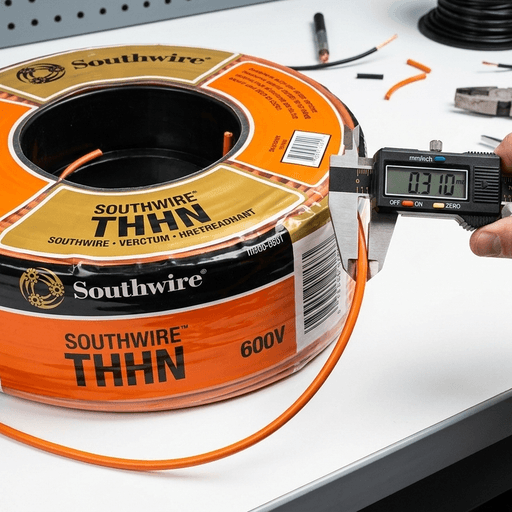
Table of Contents
- The Gap Between Nominal and Actual Dimensions
- What Causes the Variation?
- The Southwire Advantage for Conduit Fill
- SIMpull® Technology: A Game-Changer for Fill
- Why 5% Accuracy Can Save Your System
- Precision in Your Calculator: How to Input Manufacturer Data
- When Should You Use Manufacturer-Specific Data?
- Conclusion: Don’t Settle for “Approximate”
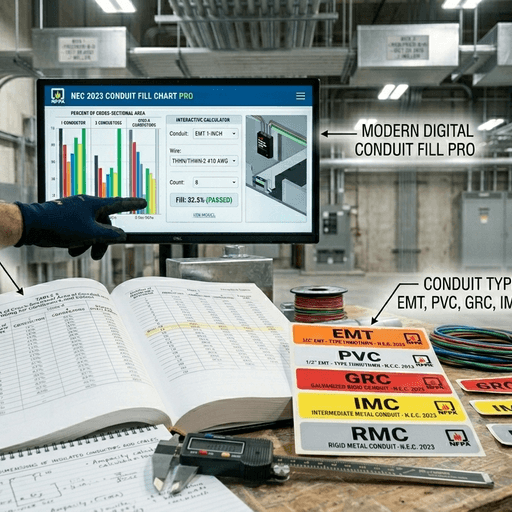
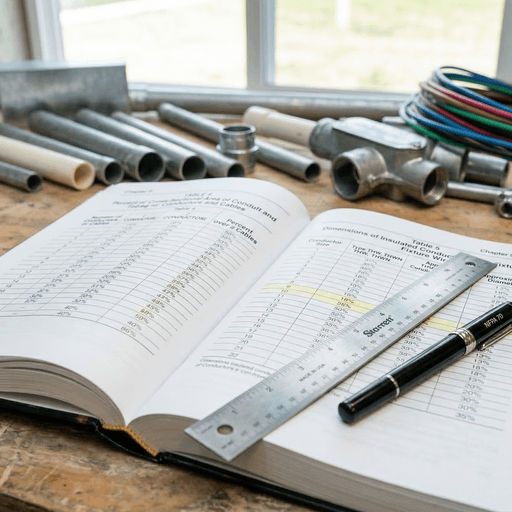
When it comes to the National Electrical Code (NEC), consistency is key. We rely on Chapter 9, Tables 4 and 5 to provide the foundation for our conduit fill calculations. But a strange thing happens when you’re in the field with a high-end digital calliper: the numbers on the screen don’t always match the numbers in the book.
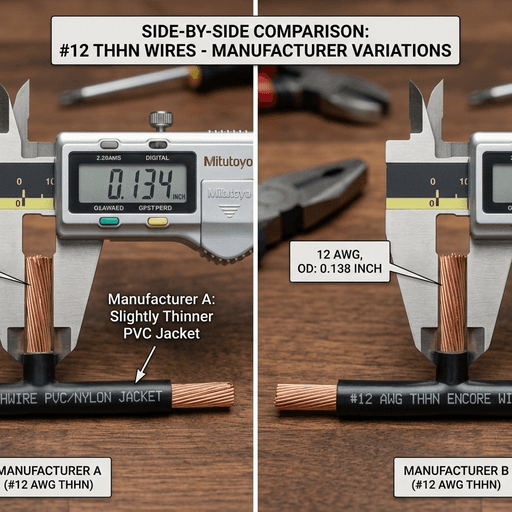
This is because the NEC provides average or nominal values. But out in the world, companies like Southwire, Encore, and Cerrowire are manufacturing products based on their own specific machinery, insulation recipes, and quality controls.
In this guide, we’ll explain why manufacturer-specific dimensions—especially for a industry titan like Southwire—matter for your conduit fill accuracy and how using them can prevent a “tight pull” or a failed inspection.
The Gap Between Nominal and Actual Dimensions
If you look at NEC Chapter 9, Table 5, you’ll see a #12 THHN wire listed with an area of 0.0133 square inches. But if you pull the spec sheet for Southwire SIMpull® THHN, you’ll find a more precise decimal value. While the difference might be just a few thousandths of an inch, those decimals add up quickly when you’re pulling 20 or 25 wires into a single 1-inch pipe.
What Causes the Variation?
- Insulation Uniformity: High-end manufacturers like Southwire use advanced extrusion techniques to keep their insulation as thin and uniform as possible. Some budget-brand wires may have slightly thicker (or less uniform) insulation, which increases the total area.
- Manufacturing Tolerances: Every factory has a “tolerance” range. A wire might be legally sold as #12 even if it’s slightly oversized, as long as it meets the electrical conductivity requirements.
- Materials Science: Brand-name wire (like SIMpull) often uses proprietary lubricants integrated into the jacket, which can affect the final outer diameter (OD) slightly compared to generic THHN.
The Southwire Advantage for Conduit Fill
Why does everyone talk about Southwire when it comes to conduit fill? It’s not just marketing; it’s about the data. Southwire is one of the few manufacturers that provides comprehensive, easy-to-access data sheets for every gauge and insulation type they produce.
SIMpull® Technology: A Game-Changer for Fill
Southwire’s SIMpull® technology doesn’t just make the wire easier to pull; it also makes the pull more predictable. Because the jacket’s low-friction characteristics are integrated into the material itself, the wire maintains its shape more consistently than cheap wire coated in aftermarket “snot” or pulling lube. This consistency allows for tighter, more accurate fill calculations on large-scale commercial jobs.
Why 5% Accuracy Can Save Your System
If you use “Generic” NEC Table 5 data for a project using 100% Southwire conductors, your final fill percentage calculation could be off by as much as 5–10%.
- Scenario A (Safe): You use generic data and calculate a fill of 38%. But the Southwire wire is slightly thinner, so your “actual” fill is 34%. You have extra room!
- Scenario B (Hazardous): You use generic data and calculate 39.5%. But you’re using a budget-brand wire that is slightly thicker. Your “actual” fill is 41.2%.
The Danger of Scenario B: You’ve just violated the code, potentially overloaded the heat capacity of your conduit, and increased the risk of damaging the insulation during the pull—all while believing you were “legal.”
Precision in Your Calculator: How to Input Manufacturer Data
If you are using our Conduit Fill Calculator, you’ll notice a “Source” or “Specific Manufacturer” option. When you select Southwire, the calculator pulls from the official Southwire Master Dimension List. This is the only way to get a calculation that reflects the actual materials on your truck.
When Should You Use Manufacturer-Specific Data?
- Large Feeders: For #1/0 AWG and larger, the differences in insulation and conductor strand shape (compact vs. compressed) are massive. generic data is often inaccurate for these huge runs.
- High-Density Pulls: If your calculation is over 35%, stop using generic tables and look up the spec sheet for the wire you ordered.
- High-Temperature Environments: When the ambient temperature is hot and your derating is already tight, every extra square millimeter of “air space” around your conductors helps dissipation.
- Professional Submittals: If you are an electrical engineer designing a blueprint, using the manufacturer’s actual OD values provides a much more robust design for the installing contractor.
Conclusion: Don’t Settle for “Approximate”
The National Electrical Code is a baseline, not a maximum. In a professional electrical installation, “close enough” is never good enough. By prioritizing manufacturer-specific dimensions—like those provided by Southwire—you ensure that your conduit fill calculations are rooted in the physical reality of your materials.
Next time you open your code book to Table 5, remember: it’s a great average, but a spec sheet is a fact.
Need Southwire-specific math? Head over to our Southwire-Integrated Conduit Fill Tool for instant, spec-sheet accurate results for every SIMpull® product.
? Frequently Asked Questions
Are all #12 THHN wires the same size?
What is Southwire's actual wire diameter?
Why does the NEC use 'approximate' areas in Table 5?
Should I always use Southwire's data if I'm using their wire?
What is nominal diameter?
About Sander K. Osei
Sander is a Professional Engineer (PE) licensed in Texas and Georgia, specializing in power distribution systems and electrical code compliance for commercial construction. With a B.S. in Electrical Engineering from Georgia Tech and 11 years of consulting experience, He reviews technical content on this site for accuracy against the latest NEC edition. Sander ensures every calculator result and code reference reflects what inspectors actually enforce.