Electrical Conduit Buyer's Guide: EMT, PVC, IMC, and RMC Compared for Real-World Jobs
Learn how to choose the right conduit for your electrical project based on cost, durability, and installation time. Our buyer's guide covers EMT, PVC, IMC, and RMC.
Маркус Т. Вебб
Zertifizierter Elektriker & Technischer Redakteur
Inhaltsverzeichnis
- 1. EMT: Electrical Metallic Tubing (The Low-Cost King)
- 2. PVC: Polyvinyl Chloride (The Underground Champion)
- 3. IMC: Intermediate Metal Conduit (The Heavy-Duty Medium)
- 4. RMC: Rigid Metal Conduit (The “Indestructible” Standard)
- Comparison Chart: Cost vs. Performance
- Hidden Costs to Consider Before You Buy
- Conclusion: Which Conduit Should You Buy?
If you’re an electrical contractor or a savvy homeowner, every project starts with a budget. And while the wire is the most expensive part of many jobs, the conduit choice can make or break your final profit margin. Do you go with the “thin-wall” EMT? Do you invest in heavy-duty Rigid (RMC)? Or do you stick with the budget-friendly PVC?
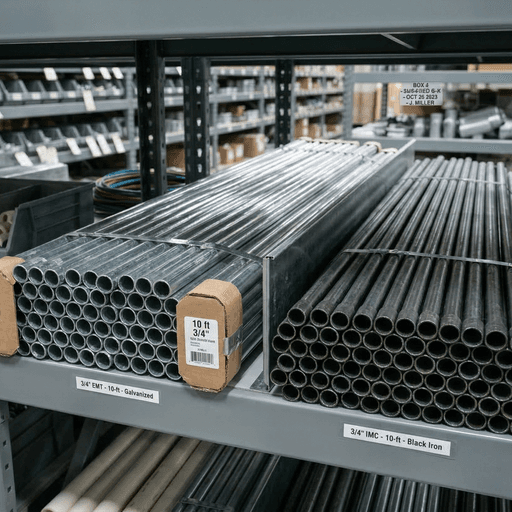
Picking the right conduit is a balance of cost, installation speed, and long-term durability. A 10-foot piece of 3/4” EMT might cost $10 at the supply house, while the same size RMC could be $40. If you pick the wrong one, you’re either throwing money away or building a system that won’t survive the first year.
In this guide, we provide a complete Electrical Conduit Buyer’s Guide, comparing the “Big Four” materials based on real-world factors that every professional takes into consideration.
1. EMT: Electrical Metallic Tubing (The Low-Cost King)
EMT is the industry standard for a reason: it’s incredibly versatile and relatively cheap.
- Approximate Cost (3/4”): $10–$15 per 10ft.
- Install Speed: Very Fast (Using set-screw or compression fittings).
- Difficulty: Low (Easy to bend with a manual hand-bender).
- Best Use Case: Dry indoor commercial buildings, residential garages, and unfinished basements.
Buyer’s Note: EMT offers the lowest price-per-foot for metallic conduit. It also has the largest internal area, meaning you can often move more wires through a 1/2-inch EMT than through a 1/2-inch PVC pipe.
2. PVC: Polyvinyl Chloride (The Underground Champion)
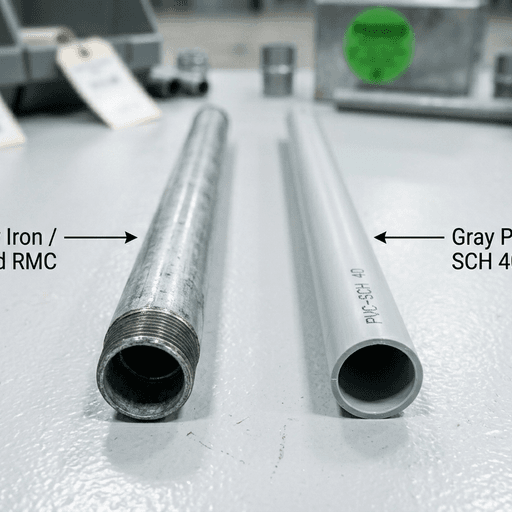
For underground or corrosive environments, PVC is the standard. It won’t rust, and it doesn’t require threading tools.
- Approximate Cost (3/4”): $6–$10 per 10ft (Schedule 40).
- Install Speed: Clean and Fast (Using solvent glue).
- Difficulty: Very Low (Can be cut with a hack-saw or a PVC cutter).
- Best Use Case: Direct burial in trenches, pool lighting, and corrosive coastal settings.
Buyer’s Note: Remember that you must also buy PVC glue and cleaner, which adds to the project cost. Also, if you use Schedule 80 PVC (for risers or heavy-duty protection), the price increases significantly, and your conduit fill capacity decreases due to the thicker walls.
3. IMC: Intermediate Metal Conduit (The Heavy-Duty Medium)
IMC is the clever “middle ground.” It’s thinner and lighter than RMC but provides nearly the same level of protection.
- Approximate Cost (3/4”): $25–$35 per 10ft.
- Install Speed: Moderate (Usually threaded together).
- Difficulty: Moderate to High (Requires a pipe threader for long runs).
- Best Use Case: Industrial buildings, hazardous locations, and rooftops where mechanical damage is a risk.
Buyer’s Note: IMC is essentially a “cost-saving” version of Rigid. It provides the same threaded reliability but uses less steel, making it cheaper and easier to transport.
4. RMC: Rigid Metal Conduit (The “Indestructible” Standard)
RMC is the ultimate choice for critical infrastructure. It is a thick-walled, heavy galvanized steel or aluminum pipe.
- Approximate Cost (3/4”): $40–$55 per 10ft.
- Install Speed: Slow (Requires heavy tools and threading).
- Difficulty: High (Very physically demanding to bend and install).
- Best Use Case: Main service entrances, high-impact areas, and high-voltage substations.
Buyer’s Note: RMC is the most expensive option. It is only worth the investment if your local code requires it or if the area is subject to extreme physical abuse (like a forklift-prone warehouse aisle).
Comparison Chart: Cost vs. Performance
| Conduit Type | Cost per 10ft (3/4”) | Durability | Install Labor | Tools Needed |
|---|---|---|---|---|
| PVC | $ (Budget) | High (Corrosion) | Low | Handsaw, Glue |
| EMT | $$ (Moderate) | Moderate | Low | Hand Bender |
| IMC | $$$ (High) | High | High | Pipe Threader |
| RMC | $$$$ (Premium) | Maximum | High | Rigid Benders |
Hidden Costs to Consider Before You Buy
When buying conduit, the pipe itself is only part of the equation:
- Couplings & Connectors: PVC glue is cheap; RMC threaded couplings can be $5–$10 EACH.
- Bending Equipment: A hand bender for EMT is $50. A hydraulic bender for 2-inch RMC can be $3,000.
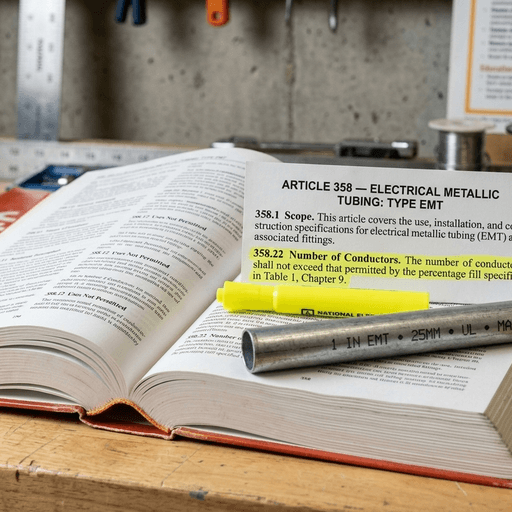
- Support Spacing: NEC Articles 358 and 352 specify different support distances. PVC requires more straps (and more labor) than rigid metallic pipe.
Conclusion: Which Conduit Should You Buy?
If you’re working on a dry, indoor budget, start with EMT. If you’re going underground, stick with PVC Schedule 40. But if you’re in a high-volume warehouse or an industrial facility, the extra cost of IMC or RMC is a small price to pay for a system that will last 30 years.
Don’t buy based on price alone. Buy based on the environment, the NEC requirements, and the speed of your installation.
Need a hand with the math? Use our Professional Conduit Type Guide to calculate the exact material costs for your next big project.
? Häufig gestellte Fragen
Which conduit is the cheapest for residential work?
What is the difference between Schedule 40 and 80 PVC?
Why is IMC (Intermediate Metal Conduit) used in large buildings?
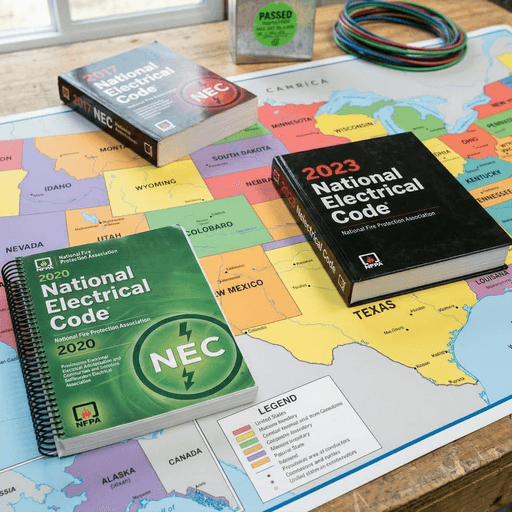
Does the price of conduit change based on the NEC edition?
Is aluminum conduit better than steel?
Über Маркус Т. Вебб
Marcus ist ein lizenzierter Elektriker mit Berufserfahrung von über 14 Jahren in der Durchführung von Elektroinstallationen in Gewerbe- und Industrieanlagen in den Vereinigten Staaten. Er besitzt eine NICET Level II Zertifizierung in Elektroanlagen und hat an Projekten gearbeitet, von der Verlegung von Kabeln in Bürohochhäusern bis hin zu Datenzentrum-Kabelsträngen. Marcus schreibt, um die Lücke zwischen dem NEC-Codebuch und Entscheidungen vor Ort zu schließen.