Remplissage de conduits commerciaux vs. résidentiels
Apprenez comment les exigences de remplissage de conduits diffèrent entre les projets électriques commerciaux et résidentiels. Découvrez pourquoi les spécifications commerciales sont souvent plus restrictives que le code de base.

Sандër K. Oзэй
Ingénieur Électrique (PE)
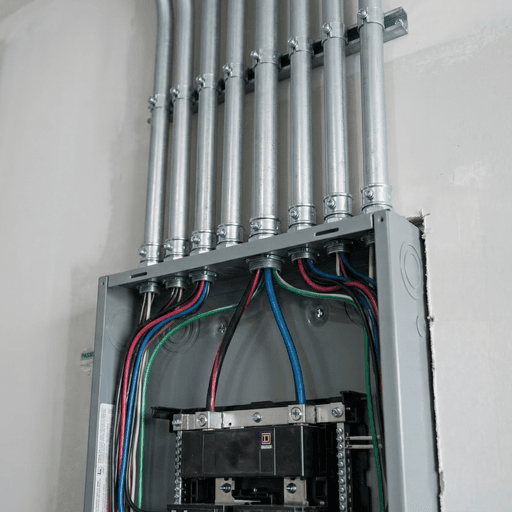
Table des matières
- Le Principe de l'État de droit: Le NEC change-t-il ?
- Conduit de remplissage résidentiel : Le standard minimum
- Les principaux défis résidentiels :
- Remplissage de conduit commercial : La sur-ingénierie "Spec"
- 1. La limite interne de 25-30 %.
- 2. Redimensionnement Obligatoire
- Résumé de comparaison : Commercial vs. Résidentiel
- Pourquoi les installations de "grade commercial" durent plus longtemps
- Conclusion : Maîtriser les Deux Mondes
Les différences ne concernent pas seulement le code ; elles concernent les spécifications d'ingénierie, la protection contre l'avenir et l'échelle mécanique de l'installation. Dans ce guide, nous allons analyser les différences réelles entre les remplissages de conduit commerciaux et résidentiels, expliquant pourquoi "se conformer simplement au code" ne suffit pas toujours dans le monde commercial.
Le Principe de l'État de droit: Le NEC change-t-il ?
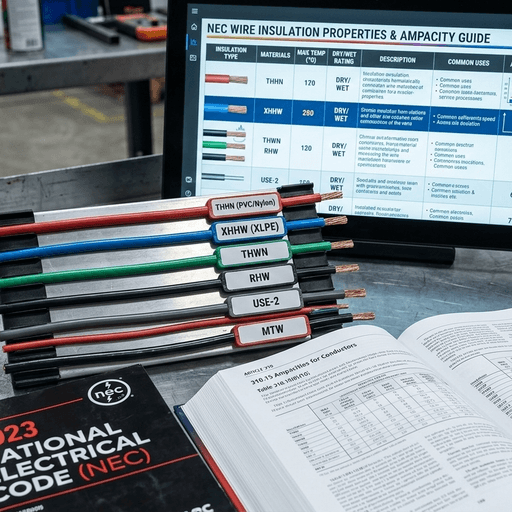
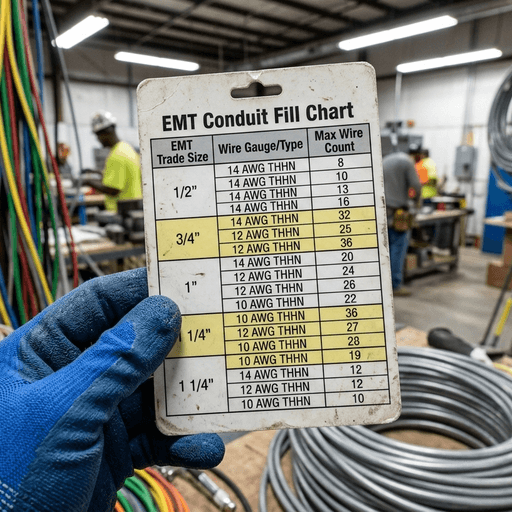
Premièrement, la réponse simple : Non. Les tableaux du chapitre 9 du NEC (40/31/53% fill) sont la loi de la terre pour tous les projets électriques agréés aux États-Unis. Que vous soyez en train de câbler une chambre à coucher dans l'Ohio ou un centre de données en Virginie, les calculs pour un remplissage de 40 % sont identiques.
Cependant, la manière dont le code est interprété et mis en œuvre change en fonction de la complexité du projet et des attentes du propriétaire.
Conduit de remplissage résidentiel : Le standard minimum
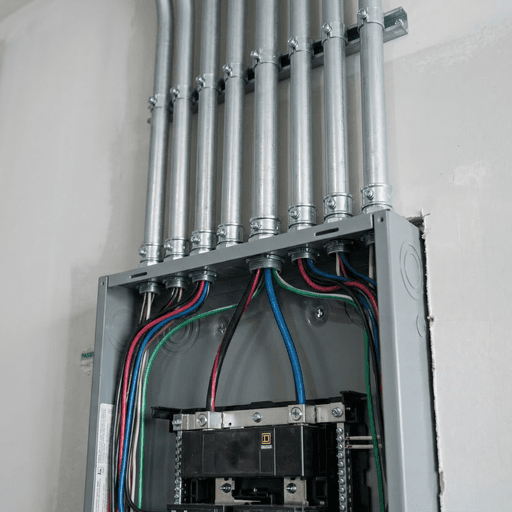
Dans les travaux résidentiels (maisons, appartements, petits commerces), le conduit est souvent utilisé pour des tâches spécifiques :
- Exposés: EMT dans un garage ou un sous-sol pour protéger les câbles des dommages.
- Entrées de service: Rigide (RMC) ou PVC pour la ligne d'alimentation principale entrant dans la maison.
- EV Chargers: Circuits dédiés depuis le tableau électrique au garage.
Les principaux défis résidentiels :
- Petits dimensions de tuyauterie: La plupart des tuyaux de conduit résidentiels sont de 1/2" ou 3/4". Étant donné que le tuyau est petit, le débordement causé par un seul fil est beaucoup plus courant.
- NM-B dans le conduit : De nombreux bricoleurs (et certains professionnels) font passer du NM-B (Romex) dans le conduit pour une protection physique dans son état "non fini". Le math for NM-B fill est notoirement difficile à calculer en raison de sa forme non ronde.
Remplissage de conduit commercial : La sur-ingénierie "Spec"
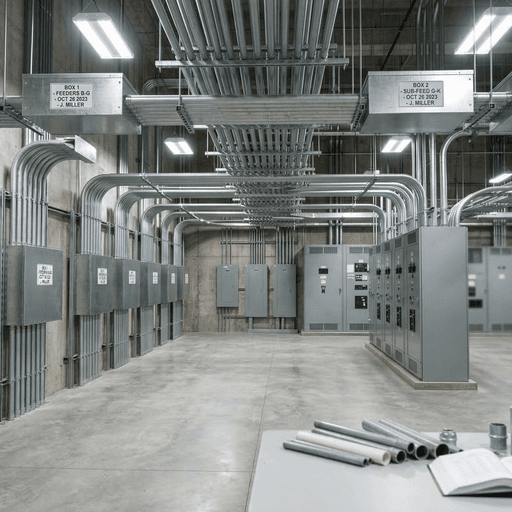
Sur un chantier commercial, on ne se contente pas de suivre le code ; on suit les Spécifications Électriques (les "Specs") rédigées par un bureau d'études.
1. La limite interne de 25-30 %.
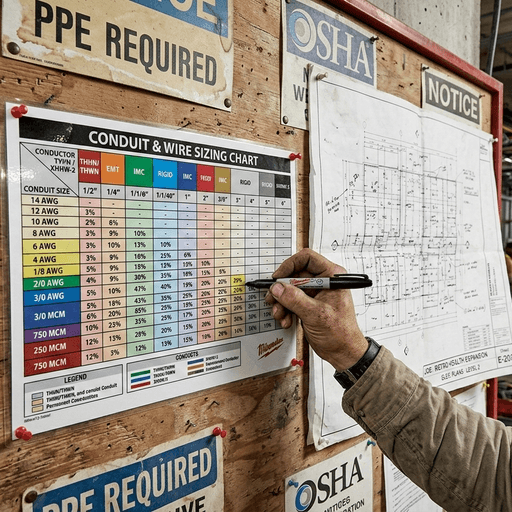
De nombreux ingénieurs commerciaux vous interdiraient de remplir un tuyau jusqu'à 40 %, autorisé par le NEC. Ils pourraient spécifier un taux de remplissage maximum de 25 % ou 30 %. Pourquoi ?
- Anticiper l'avenir : Les entreprises changent. Un bureau a besoin de lignes de données demain qui ne lui sont pas nécessaires aujourd’hui. Un espace supplémentaire dans le conduit permet au propriétaire d’éviter des projets coûteux de “démantèlement et remplacement” plus tard.
- Facilité d'extraction : Tirer 150 mètres de fil est un coût de main-d'œuvre important. Un tirage à 30 % est nettement plus rapide et plus sûr qu'un tirage « serré » à 40 %.
2. Redimensionnement Obligatoire
Il est courant que les spécifications commerciales commencent par : "Aucune taille inférieure à 3/4 de pouce ne doit être installée." Même si le code autorise 1/2 pouce, l'ingénieur souhaite la capacité et la résistance mécanique supplémentaires de 3/4 de pouce comme norme minimale.
Résumé de comparaison : Commercial vs. Résidentiel
Fonctionnalité
Pourquoi les installations de "grade commercial" durent plus longtemps
Dans un environnement résidentiel, un trépan est souvent "configurez-le et oubliez-le". Dans une installation commerciale ou industrielle, le système est dynamique.
- Masse thermique : Les bâtiments commerciaux ont souvent des températures ambiantes plus élevées dans leurs locaux techniques et plafonds. Un remplissage du conduit plus faible (environ 25 %) permet d'empêcher la chaleur de s'accumuler et de détériorer l'isolation au fil du temps.
- Blindage EMF : Dans les environnements de bureaux à haute densité, plus d'espace entre les conducteurs dans le conduit peut légèrement réduire les interférences électromagnétiques (IEC) entre les lignes d'alimentation et les lignes de signaux à basse tension.
Conclusion : Maîtriser les Deux Mondes
Que vous réalisiez une maison de rêve ou un centre de données, l'objectif est le même : Sécurité et Conformité. En comprenant que les spécifications commerciales fixent souvent un niveau plus élevé que le code résidentiel de base, vous pouvez mieux préparer vos offres, commander les bons matériaux et vous assurer que votre travail résiste à la fois au projecteur de l'inspecteur et à l'épreuve du temps.
Restez flexible, utilisez le calculateur adapté à votre type de poste et laissez toujours un peu de "dégagement" dans la tuyauterie pour le suivant.
Travail sur un projet commercial ? Utilisez notre Calculateur de spécifications techniques professionnelles pour ajuster vos objectifs de remplissage à 25 %, 30 % ou 35 % avec un seul clic.
? Questions fréquemment posées
L'NEC a-t-il des tables de remplissage différentes pour les travaux commerciaux par rapport aux travaux résidentiels ?
Pourquoi les travaux commerciaux nécessitent-ils souvent des conduits plus grands ?
Puis-je utiliser un câble NM-B dans un conduit dans un garage résidentiel ?
L'EMT est-il plus courant dans les travaux commerciaux ou résidentiels ?
Qui inspecte le remplissage du conduit sur les sites commerciaux ?
À propos Sандër K. Oзэй
Sander est un Ingénieur Professionnel (IP) agréé au Texas et en Géorgie, spécialisé dans les systèmes de distribution d'énergie et la conformité aux codes électriques pour la construction commerciale. Il est titulaire d'un B.S. en Génie Électrique de Georgia Tech et possède 11 années d'expérience en conseil. Il examine le contenu technique sur ce site pour vérifier son exactitude par rapport à la dernière édition du NEC. Sander veille à ce que chaque résultat de calculleur et chaque référence au code reflètent ce que les inspecteurs appliquent réellement.