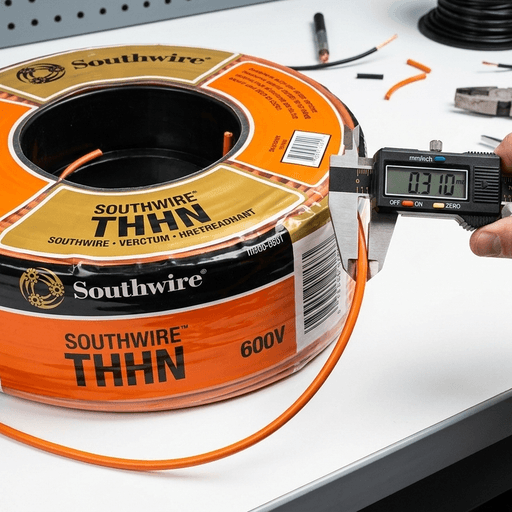
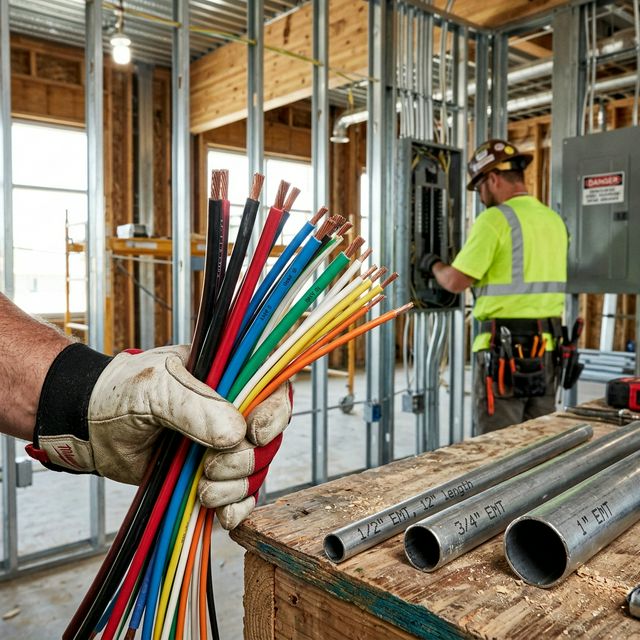
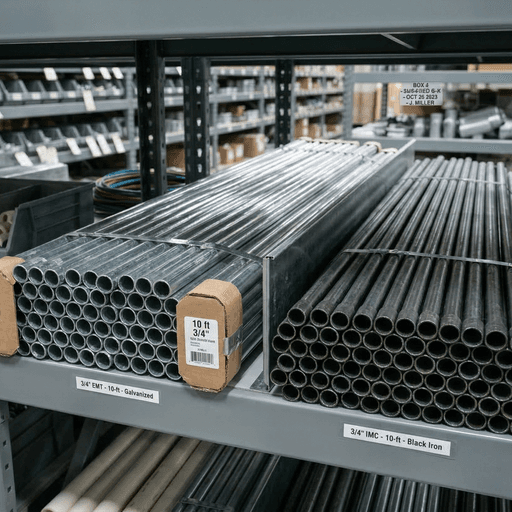
Trådsnittningsyta Diagram
Hitta en komplett referensdiagram för ledartjocklekar. Jämför AWG-storlekar, ytterdiameter och area för THHN, XHHW och andra vanliga ledartyper.

Sändar K. Oseji
Eltekniker (PE)
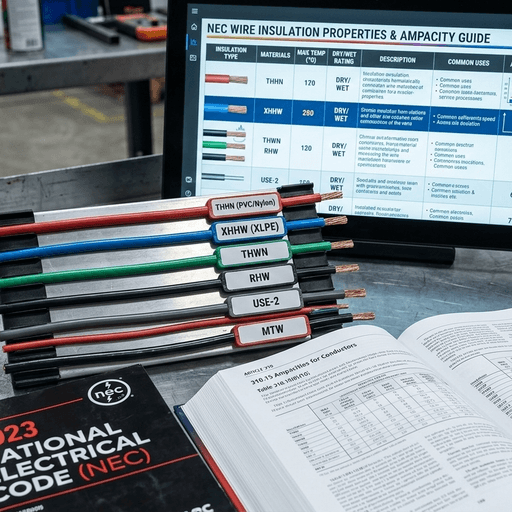
Att få fel på arean med bara en bråkdel av en kvadrat tum kan vara skillnaden mellan ett projekt som är efterlevande av koden och ett som misslyckas med en inspektion. I denna guide tillhandahåller vi en komplett referensdiagram för de vanligaste AWG (American Wire Gauge)-storlekarna och deras associerade ytor för THHN, XHHW och andra standardisoleringstyper.
Skillnaden mellan Gauge och Area
En av de vanligaste missuppfattningarna för lärlingar är att "AWG" är en direkt mätning av ledarens fysiska tjocklek inuti en ränna. Det är inte så.
- AWG (Gauge): Refererar endast till tjockleken på ledarmaterialet (koppar eller aluminium).
- Snittarea: Avser den totala utrymmet som ledaren och dess isolering upptar.
THHN / THWN-2 Wire Area Chart (NEC Table 5)
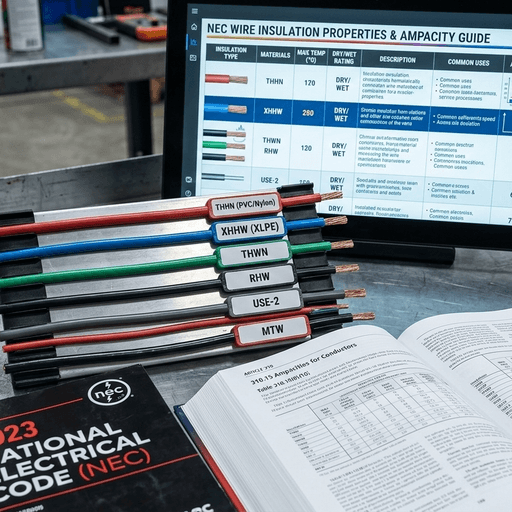
Det vanligaste kablaget som används i torra kommersiella lokaler är THHN (Thermoplastic High Heat-resistant Nylon-coated). Det är populärt just för att dess isolering är relativt tunn, vilket tillåter fler kablar i en given anslutning.
AWG Size
XHHW / XHHW-2 Wire Area Chart
XHHW (Cross-linked Polyethylene High Heat-resistant Water-resistant) är vanligt i fuktiga eller blöta miljöer. Det är tjockare och mer robust än THHN.
AWG Size
Intressant notis: Observera att för #12 kablar är XHHW (0.0181) nästan 35% större än THHN (0.0133). Om du inte justerar dina rörstorleksberäkningar för dessa olika isoleringar kommer du att vara kraftigt överfylld.
Hur man beräknar ytan själv (För specialkablar)
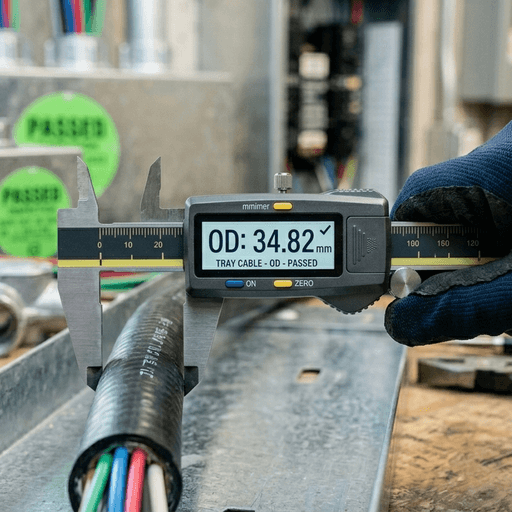
Vad händer om du drar en specialbelagd datakabel eller en spåntypkabel som inte finns i Tabell 5? Du måste använda tillverkarens tekniska datablad för att hitta Ytterdiameter (OD) och sedan använda formeln för arean av en cirkel.
Diameter-to-Area Formeln:
Område = 0.7854 × Diameter²
Exempel:
Anta att du har en specialkabel med en ytterdiameter på 0,25 tum.
- Område = 0.7854 x (0.25 x 0.25)
- Omkrets = 0.7854 x 0.0625 = 0.0491 kv. tum.
Varför Decimalprecision Är Viktig
I conduit fill math räknas varje decimal. Till exempel är skillnaden mellan en 39,5 % fyllning och en 40,5 % fyllning bara 1 %. Men den 1 % skillnaden är skillnaden mellan ett arbete som uppfyller föreskrifterna och ett som inte gör det.
Medan vissa gamla elinstallatörer försöker "uppskatta" sina ledningsantal, förlitar sig en professionell alltid på värdena i NEC Chapter 9, Table 5. Detta säkerställer att deras arbete är matematiskt korrekt och universellt försvarbart för inspektörer och ingenjörer.
Slutsats: Ryggens kärna av noggrannhet
Exakt ledartvärsnittsdata är grunden för ett framgångsrikt ledningsdrag. Genom att förstå skillnaden mellan Gauge och Area och använda rätt referenskort för din specifika isoleringstyp eliminerar du gissningarna från dina livssäkerhetsinstallationer.
Undvik att nöja dig med "tillräckligt nära." Använd exakta siffror, fyll dina rör korrekt och gör alltid jobbet ordentligt första gången.
Behöver du ett snabbare sätt att ta fram dessa områden? Använd vår Digital Wire Cross-Sectional Area Chart för omedelbara resultat för alla AWG-storlekar och isoleringsmaterial.
? Vanliga Frågor
Vad är tvärsnittsarean för en ledare?
Är tvärsnittsarean endast för koppar?
Hur påverkar ledarinsolering arean?
Vad betyder OD i en ledarkarta?
Har aluminiumledare samma area som kopparledare?
Om Sändar K. Oseji
Sander är en Civilingenjör (PE) licensierad i Texas och Georgia, specialiserad på eldistributionssystem och elektrisk efterlevnad av byggregler för kommersiell konstruktion. Med en kandidatexamen i Elektroteknik från Georgia Tech och 11 års konsultationserfarenhet granskar han teknisk innehåll på denna webbplats för noggrannhet mot den senaste NEC-utgåvan. Sander säkerställer att alla beräkningsresultat och kodreferenser återspeglar vad inspektörer faktiskt föreskriver.